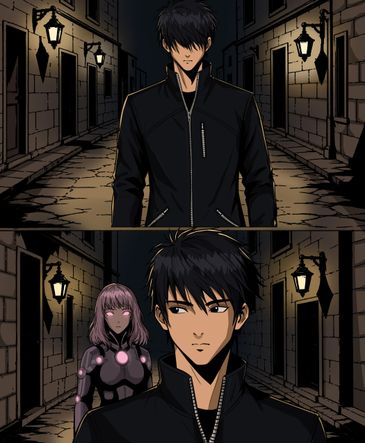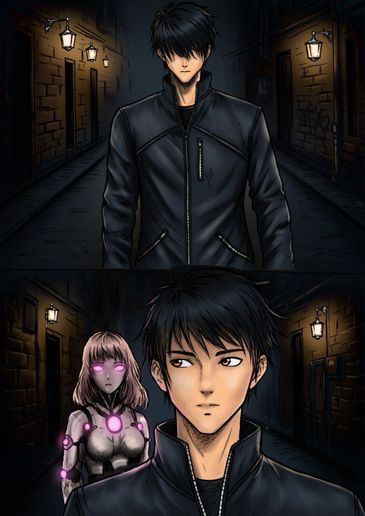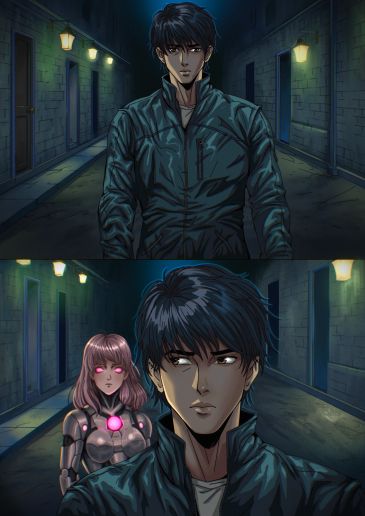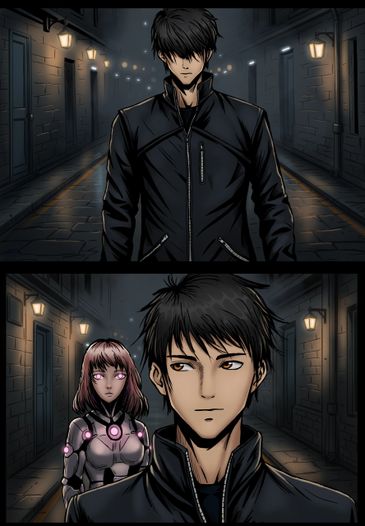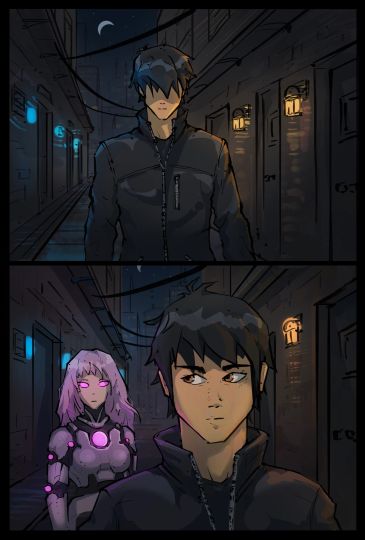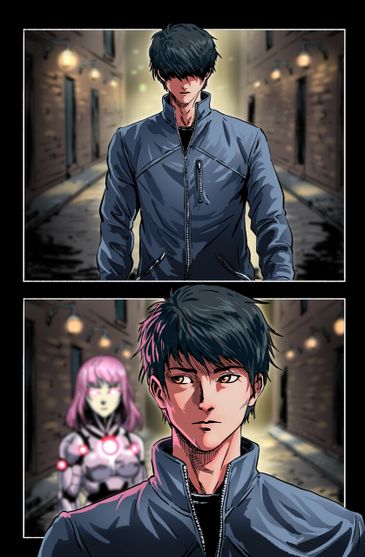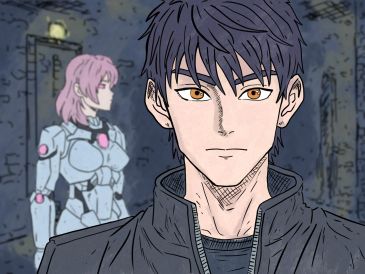
Daniel Haddock's initial linework for The Silent War How could I not pick him?

My initial roughs

A long journey begins
Eyes were first...
My journey towards creating a graphic novel started with the goal of becoming an artist. Little did I know that the first thing I obsessively practiced drawing would turn out to be really important. Starting in 8th grade about ten years ago, I'd draw eyes constantly until I was satisfied with how they looked. It took so long that I thought that I'd never actually be able to draw a whole body. However, I soon found that I could position 3D physical "mannequins", photograph them, and upload them into Photoshop as an opaque layer for reference. I would re-draw the mannequins by hand and then add the eyes (the one thing I was good at drawing) and it worked pretty well!
I also practiced by drawing the eyes of each character from my favorite manga.

An Award-winning screenplay!
Around the time I entered high school, I came up with the idea of a supernatural being in human form battling with robots in the future while managing a relationship with a human. I would invent episodes every night as I went to sleep (I still do!) and later write down my favorite scenes (believe it or not, the Notes app on my phone is my #1 most used application). By 2019, I had compiled all of my favorite storylines into an 80-page screenplay and submitted it to the L.A. County Fair to compete with other creative writers in the area. I anxiously awaited to results and was super excited when I found out that I had won the Sweepstakes award (best of the blue ribbons) for "The Silent War - 2086." I had put my heart and soul into the characters and story and began dreaming of publishing it as a graphic novel someday.
finalizing the look of my characters
Introducing Hisao
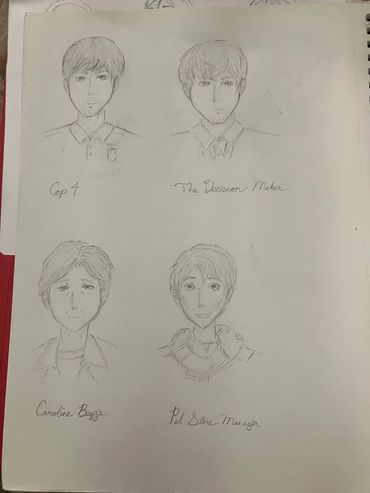
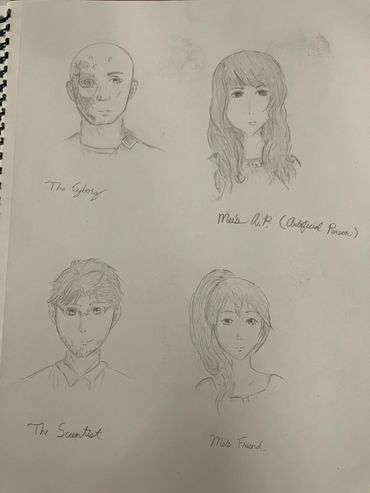
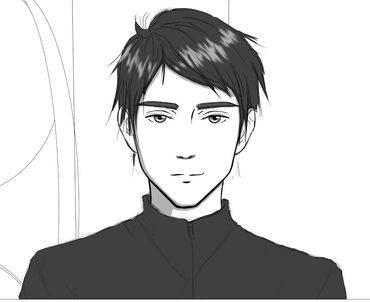
I knew that if I were to ever publish this as a graphic novel, I would need to finalize the look of my characters. I may have gotten a LITTLE carried away, drawing Hisao hundreds of times, but my goal was to have consistency. I never wanted my characters to look different each time I drew them, and I couldn't think of any shortcut to learn how to do that. I just had to draw them again and again and again until I could recognize them each and every time.
first hand-drawn version of the main characters
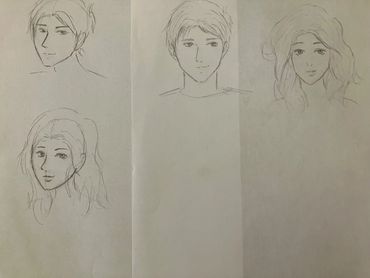

The Digital Art Project of a Lifetime
I started officially working on the art for "The Silent War - 2086" in a high school class called Media Art. I had an amazing teacher who taught me how to use the latest digital art technology, but it took a whole year just to draw a few pages of the graphic novel. My friends joked that by the time I finished it, it would be take place in the present day. They weren't wrong!
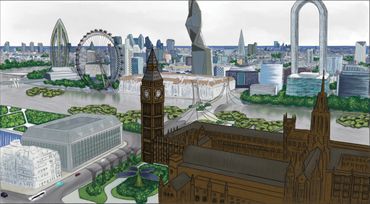
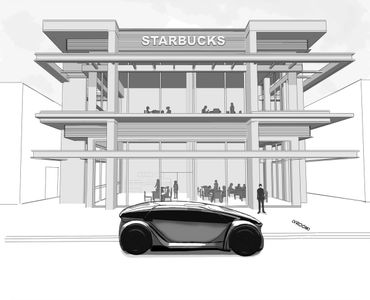
If I ever wanted to finish it, I had to get creative. For example, I found that a helpful way to manage perspective in complicated buildings (e.g. ones with curved surfaces) is creating a model of the building in Tinkercad, a program that allows users to easily form shapes together to make 3D models in the computer. The viewpoint can be set from within the building at any height, and this can be screenshotted and put into Photoshop. Using reference tools like Tinkercad, Blender, and PoseMyArt, and sometimes even posing and photographing physical models, I could overcome my obstacles related to staging and perspective. I always enjoy looking for creative solutions to "impossible" problems!
In college, I spent a summer taking zoom classes from a fantastic art teacher overseas who taught me a ton about things I hadn't even thought about, like page design, color design, and how to use panels to control pacing. He always encouraged me to continue using technology to find ways to improve the speed and quality of my work. Unfortunately, I realized that the time it would take before I could start publishing chapters was still an insurmountable challenge. As much as I wanted to share my story and characters, I eventually put the project on the back burner.
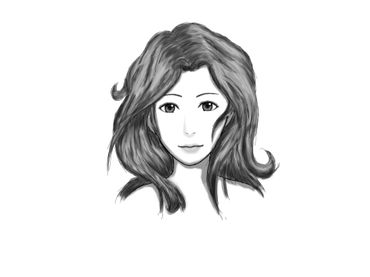
My first hand-drawn Digital art
.png/:/cr=t:0%25,l:0%25,w:100%25,h:100%25/rs=w:370,cg:true)
How I went from "I'm never going to get this done" to "I can do this" (with help)
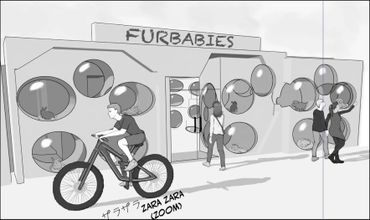
Since I lacked confidence in my artistic ability to create high-quality roughs, I assumed I would need to hire artists someday to bring my project to life as a graphic novel. Years later, when I saw what A.I. was capable of, I dusted off my project and tested generative image tools as a previsualization aid for the panels I had already storyboarded. At first, I'll admit that I was very impressed. The speed and superficial polish were obvious while the limitations took longer to recognize. Despite the glitches, these new tools would allow me to create precise visual references I could provide as a starting point for the penciler so they wouldn't have to spend time and effort deciphering what I wanted. I could now provide fully detailed and colored draft panels that communicated precisely what I was looking for, and I could focus on page design and pacing. So I spent months working full-time, building and correcting the previsualizations based on my script, original panels, and storyboards. With Photoshop, I fixed as many issues as I could with continuity, anatomy (notice the glitch below the right hand of one of the walkers in the image above), expressions, and unintentional art design shifts, but some edits were too time consuming, so I just took notes on what was left for the artist to fix. While I felt very productive, I also became intimately aware of the artistic shortfalls of A.I.: lack of art-style consistency (sometimes becoming photorealistic for no reason), lack of character consistency, extra fingers, clothing changes, and hair inconsistencies, just to name a few. Don't let anyone convince you that artists will become unnecessary anytime soon!
Finally making so much progress after all this time was rewarding, but I knew there was still a long path ahead. I went on a search for collaborators and evaluated the work of many artists and hired several to draw test panels to see if we were a good fit. Some incredible artists responded, but unfortunately, there were also a couple who were secretly using generative A.I. which required me to become adept at distinguishing human-drawn work from machine-drawn work. It became even trickier since AI-detectors can now give false-positives for digital art created in the latest versions of Photoshop, so you really have to inspect the layered source files. While these tests were going on, I went on a hike/art event and rather than draw nature like the other hikers, I decided to draw Hisao being stalked by a robot. It actually wasn't terrible, and I was looking at my art with new eyes. My pencil and paper drawing had precisely the kind of imperfections I was looking for in the test panels as a sign that they were hand-drawn! After all this time, I came to a surprising conclusion: rather than hire an artist to do the pencilwork, why not draw the panels myself and hire an experienced inker and colorist who can turn my roughs into a professional-looking final product? I've narrowed my list of potential collaborators down to a few incredible artists and after seeing their work, I know that whoever I pick will definitely help turn this graphic novel into something amazing.
It's been a long and surprising journey, but now a new journey begins as I start penciling the 200-page graphic novel. I'm sure I'll make many mistakes in my art, especially in the early chapters, but I'm now realizing that the mistakes are not something to dread. They are the artifacts that give the work a soul, and prove that I struggled in order to put my vision out into the world.

My "nature walk" pencil-sketch that changed my mind. I can do this!
Work From Other applicants